Loading... Please wait...
Categories
 Recently added
-
 £1,500.00 (inc VAT) £1,250.00 (ex VAT)
-
 £52.46 (inc VAT) £43.72 (ex VAT)
-
 £57.12 (inc VAT) £47.60 (ex VAT)
-
-
 £137.20 (inc VAT) £114.33 (ex VAT)
Our Newsletter
- Home
- Hire & Maintenance for Safety & Medical Equipment
- Safety Equipment Maintenance
- Inspection, maintenance & Certification, for EN 393-396 Life-jackets
- Home
- Rescue boats, Throw-lines,Buoys & Life-jackets
- Life jacket Spares & Accessories
- Inspection, maintenance & Certification, for EN 393-396 Life-jackets
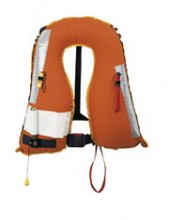
Inspection, maintenance & Certification, for EN 393-396 Life-jackets


Product Description
Send us your Life-Jacket for annual service, repair and inspection certificate;
Models this scheme accommodates:
- Manually operated, without harness - up to 275 Newton, all Plastimo, XM and Crewsaver models.
- Manually operated, with harness - up to 275 Newton, all Plastimo, XM and Crewsaver models.
- Automatically (Soluble cartridge type) operated, without harness - up to 275 Newton, all Plastimo, XM and Crewsaver models.
- Automatically (Soluble cartridge type) operated, with harness - up to 275 Newton, all Plastimo, XM and Crewsaver models
- Automatically (Hydrostatic type) operated, with harness - up to 275 Newton, all Plastimo, XM and Crewsaver models (NOT INCLUDING replacement or parts of HYDROSTATIC ACTUATORS)
- Automatically (Hydrostatic type) operated, with harness - up to 275 Newton, all Plastimo, XM and Crewsaver models (NOT INCLUDING replacement or parts of HYDROSTATIC ACTUATORS)
- Cleaning, removing surface corrosion and checking fabric integrity, stitching, harnesses & buckles
- Checking and lubricating serviceable components, as necessary.
- Checking pneumatic integrity and manual inflation valves.
- Replacement of cartridge, cylinder
- Replacement of emergency whistle (where missing).
- Final inspection, re-packing and dispatch with certificate of conformity.
- Replacement of major components, such as air chambers.
- Re-stitching, or replacing worn harnesses and buckles.
- Replacement or repair to Emergency position indicating beacons, lights, or electrical accessories.
- Replacement of Hydrostatic actuator mechanisms, in whole or in part. These are available as spares and 'retro-fitted' options.
With effect from 1995, the EU required that all life jackets sold must be 'CE' marked. There is a misconception - even amongst some manufacturers, that the CE mark represents a kind of 'Approval' of quality and competence. THIS IS SIMPLY NOT THE CASE. The CE mark is simply a 'product' pass-port, permitting its free movement and trade, within this Federal Republic of Europe.
The CE mark simply confirms that the product has been made, or otherwise, imported by a firm or organisation, registered in a EU state. Registered firms are required to maintain a 'technical file' that holds all details of design, construction and intention. Certain products (not Life-jackets, unfortunately) are classed as Personal Protective Equipment (PPE) and PPE falls in to three classes: the lowest, to protect against minor insults and injury; the second class, to protect against hazards which would lead to significant injury, or illness and the third class, to protect against hazards of mortal danger. The latter class demands that PPE is tested by an independent, third party, which will usually refer to a 'European Norme' (we used to have British Standards, instead), or, if there is no widely acknowledged protocol for the product type, then that a test is devised to ensure that the article meets its design criteria.
In the case of Life-Jackets, there are a number of voluntarily applied test standards, such as those demanded for compliance with SOLAS (Safety of Life at Sea - an internationally agreed convention, aimed at commercial shipping, ferries and so forth).
More commonly (applied to in-shore and recreational uses), are EN 393, EN 395, EN 396 & EN 399, which categorise Life-Jackets in to four classes of buoyancy, or lifting force, based on the density of pure water, compared with air.
These four classes are, repectively: 50 Newton, 100 Newton, 150 Newton and 275 Newton. There is a fifth class, aimed at buoyancy vests (such as canoeists wear) that suggests 'adequate buoyancy' for an 'average' person whose body mass is 70 Kg.
The usual recommendations for commercial work are: 150 Newton, for in-shore use and 275 Newton, for Off-shore and SOLAS class uses. In other words, EN 396 and EN399 are commended. Further guidance on Selecting Life-Jackets, is available among our free downloads.
Find Similar Products by Category
Customers Who Viewed This Product Also Viewed
-
 £264.00 (inc VAT) £220.00 (ex VAT)
-
 £3.00 (inc VAT) £2.50 (ex VAT)
-
 £2,880.00 (inc VAT) £2,400.00 (ex VAT)
-
 £111.60 (inc VAT) £93.00 (ex VAT)
Add to Wish List
Related Products
-
 Safety Harness & lanyard/restraints: Annual inspection and certification £18.00 (inc VAT) £15.00 (ex VAT)
 -

-
-
 Interspiro Test box for Spiromatic U/QS and Divator maintenance £9,540.00 (inc VAT) £7,950.00 (ex VAT)
 -